
Bible stories for kids
The Prodigal Son for Kids
The Prodigal Son, also called the parable of the lost son, is a story Jesus told in Luke 15:11-32: a younger son wastes everything, his father runs to welcome him home, and his older brother will not come in. Here it is for kids and children, to read aloud, hear narrated or see in the picture storybook, with the King James words beside every scene.
The storybook opens full screen, one page at a time. The whole story is also below, with the Bible text beside it.
Where it is in the Bible
- Bible passages
- Luke 15:11-32, the third of three stories Jesus told in Luke 15 about something lost and found
- Who is in it
- Jesus told it. In the story: a father, his younger son and his older son
- Where it happens
- Luke doesn't name the place. Jesus told it to publicans and sinners, with Pharisees and scribes listening (Luke 15:1-2)
- When
- While Jesus was travelling and teaching on his way to Jerusalem (Luke 13:22)
- Key verse
- “For this my son was dead, and is alive again; he was lost, and is found. And they began to be merry.” (Luke 15:24, KJV)
The story
This is a story Jesus told. It is in the Bible, in the book of Luke.
Have you ever lost something special, and looked and looked for it? How did it feel when you found it again? In this story, a father says the same happy words two times. Listen for them.
Scene 1 of 5
Jesus tells a story
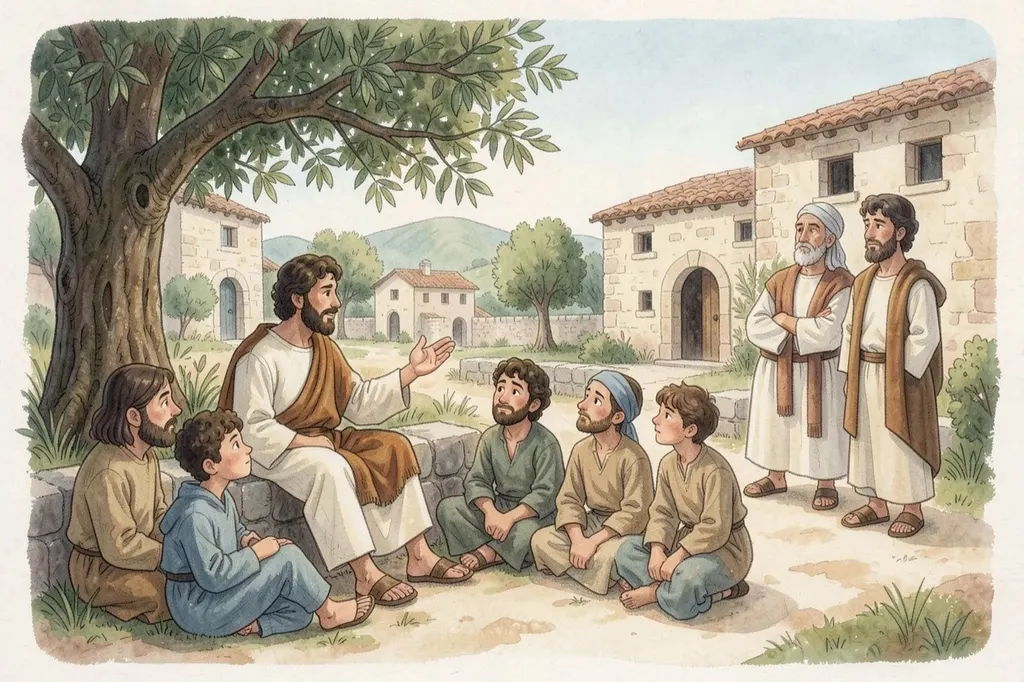
One day, a crowd came to listen to Jesus. Some of them were publicans. Publicans collected tax money for the Romans, and most people did not like them at all.
Others in the crowd were people everyone called sinners, people known for doing wrong. And they all came near to hear Jesus.
Some Pharisees and scribes were watching too. They were men who studied God's law, and worked very hard to keep every part of it. And they grumbled. They said:
“This man receiveth sinners, and eateth with them.”
Receiveth means welcomes. Jesus welcomed people who had done wrong, and he even sat down and ate with them.
So Jesus told them some stories. One was about a shepherd who lost a sheep. One was about a woman who lost a coin. And one was about a father and his two sons.
Scene 2 of 5
Give me my share
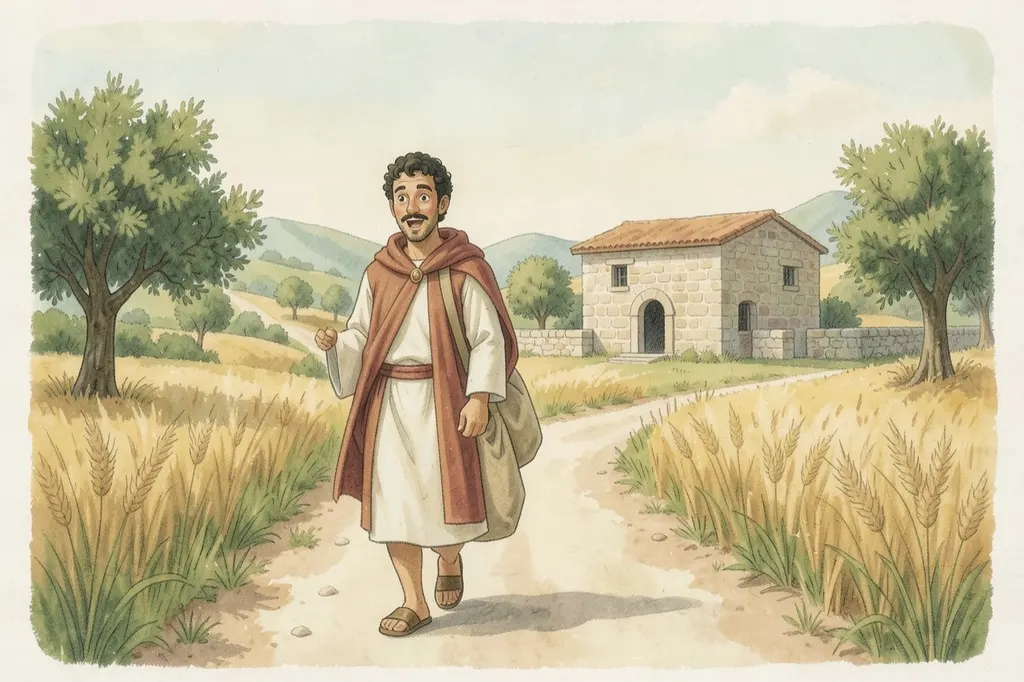
This is the story Jesus told. It begins like this:
“A certain man had two sons:”
One day, the younger son spoke to his father. He asked for his share of everything his father owned, the part that would one day be his.
And the father did it. He divided what he had between his two sons.
Not many days later, the younger son packed up everything he had. He set off on a long journey, to a far country, far away from home.
And there, he wasted it all. The Bible calls it riotous living: wild and careless living, spending and spending, until every bit of it was gone.
Scene 3 of 5
Feeding the pigs
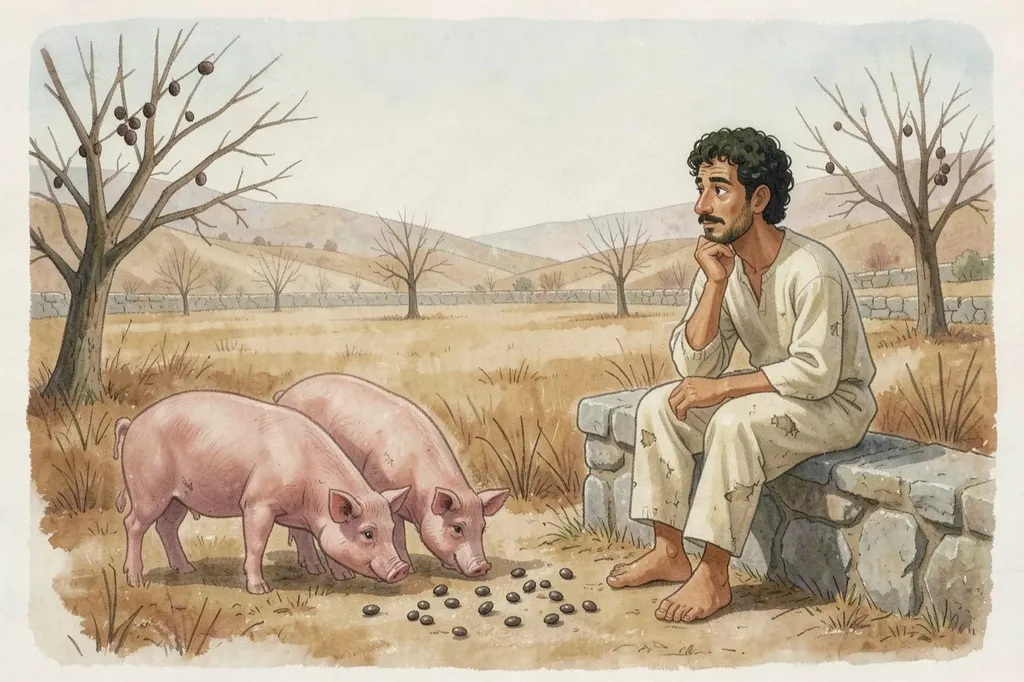
Then a mighty famine came to that land. A famine is a time when there is not enough food for anyone.
The younger son had nothing left, and he began to be hungry. So he found work with a man of that country, and the man sent him out to the fields to feed pigs.
The pigs ate husks, the dry bean pods that grow on trees. The young man was so hungry that he wished he could eat the pigs' food. And nobody gave him anything.
Then, one day, he came to himself. That means he finally saw the truth about where he was. He thought about home. Even the hired servants at his father's house had more bread than they could eat. And here he was, starving.
So he made a plan. He said:
“I will arise and go to my father”
He would tell his father that he had done wrong, against God and against him. He would ask to work as one of the hired servants.
Scene 4 of 5
A great way off
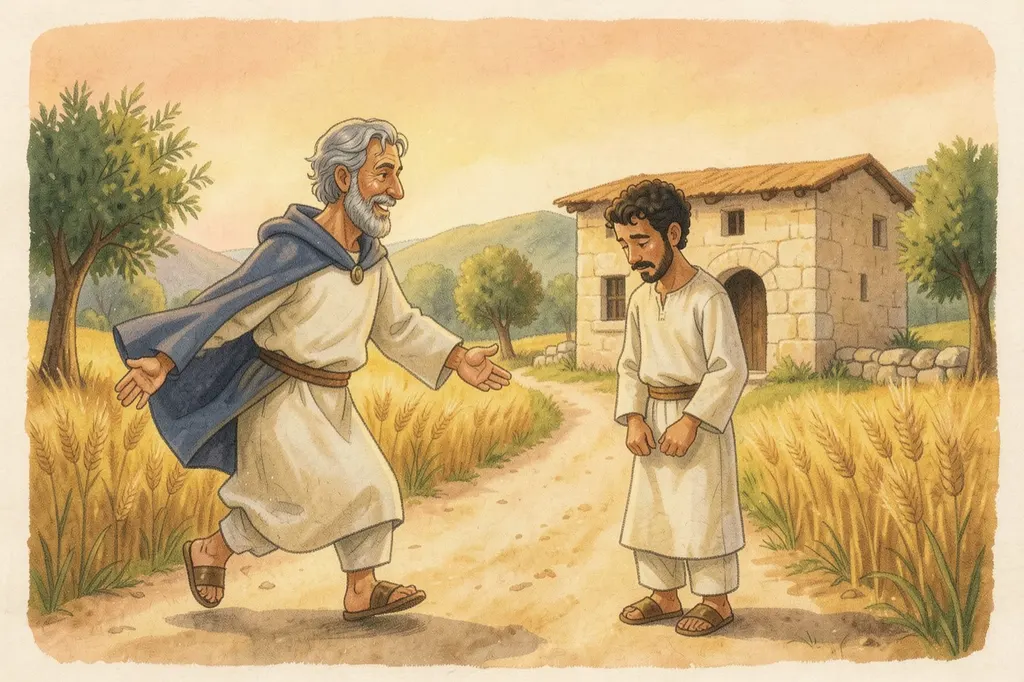
So the younger son got up, and started the long walk home.
What do you think his father did when he saw him?
“But when he was yet a great way off, his father saw him, and had compassion, and ran, and fell on his neck, and kissed him.”
Compassion means the father's heart was full of love for his son. Fell on his neck means he threw his arms around him and held him tight.
Then the son spoke. He said he had done wrong, against God and against his father. He was not good enough to be called his son any more.
But the father called to his servants. He told them to bring the best robe for his son, a ring for his hand, and shoes for his feet. They would have a feast with the fatted calf, the calf saved for a special day. And the father told them why:
“For this my son was dead, and is alive again; he was lost, and is found.”
The son had not really died. But while he was lost, it was as if he had. And the party began.
Scene 5 of 5
The older brother
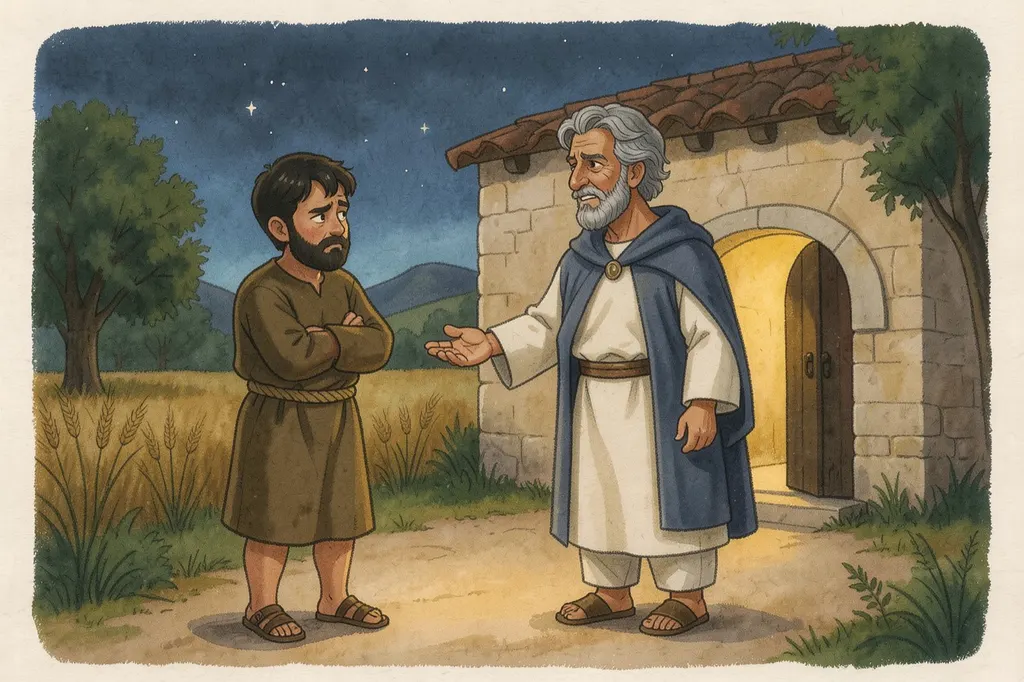
Now the older son was out working in the field. As he came near the house, he heard music and dancing.
He called one of the servants and asked what was going on. The servant told him that his brother had come home safe and sound, and their father had made a feast.
The older brother was angry. He would not go in.
So his father came out to him, and begged him to come in.
The older brother said he had worked for his father for many years, and always obeyed him. Yet he had never been given even a young goat, for a party with his friends. But when this son came home, after wasting his father's money, the father made a feast for him.
And the father said:
“Son, thou art ever with me, and all that I have is thine.”
Ever means always, and thine means yours. It was right to be glad, the father said. And he said his happy words again:
“for this thy brother was dead, and is alive again; and was lost, and is found.”
Do you remember the father's happy words? He was lost, and is found.
The father said them when his younger son came home.
He said them again outside the house, to his older son.
Can you say them too? Was lost, and is found.
Jesus didn't say whether the older brother went in to the feast. He ended the story there, with the father outside, asking him to come.
Was lost, and is found.
How to explain the prodigal son to a child
Start with who Jesus was talking to: people who grumbled that he welcomed sinners (Luke 15:2). Then tell it as a story about a father. The younger son wastes everything, but while he is still a great way off, his father runs to him (Luke 15:20). Let the father's words, was lost, and is found, be the line your child says along, and leave the ending open, as Jesus did.
What this story shows about God
For grown-ups. The story itself never states a lesson, so here it is, with the verses behind it.
God welcomes people home
Jesus told this story because people grumbled that he welcomed sinners. Just before it, he said there is joy in heaven over one sinner who turns back to God.
Luke 15:1-2; Luke 15:7God runs to meet us
The son was still a great way off when his father saw him, had compassion, and ran to him. He hugged and kissed his son before the son had said a word.
Luke 15:20-21God goes out to both sons
The father didn't only run to the son who had wasted everything. He also went out to the angry son who would not come in, and told him that all he had was his.
Luke 15:28-31Questions to ask after
Pick the ones that fit your child. There are no wrong answers.
Ages 3 to 5
- What did the father do when he saw his son coming home?
- What three things did the father give his son to wear?
- What were the father's happy words?
Ages 6 to 9
- Why do you think the younger son decided to go home?
- How do you think the older brother felt when he heard the music?
- Have you ever said sorry and been forgiven? How did it feel?
Ages 10 to 12
- Jesus told this story to people who grumbled that he ate with sinners. Who in the story is most like them?
- The father went out to both of his sons. What does that tell you about him?
- Why do you think Jesus ended the story without telling us whether the older brother went in?
If your child asks
Honest answers to the hard questions, with the verses behind them.
Was the prodigal son a real person?
The prodigal son is a parable: a story Jesus told to teach something. Luke 15:3 says "he spake this parable unto them", and the Bible never names the father or his sons. What is true is that Jesus told it, to people who grumbled that he welcomed sinners and ate with them (Luke 15:1-2).
Luke 15:1-3
What does prodigal mean?
Prodigal means wasteful. The word isn't in the Bible: the prodigal son is a name people gave this story later, because in Luke 15:13 the younger son "wasted his substance with riotous living". Many people call it the parable of the lost son instead, after the father's words in Luke 15:24.
Luke 15:13
Why does the son feed pigs in the prodigal son story?
In the parable of the prodigal son, the younger son has spent everything, a famine comes, and the only work he finds is feeding a man's pigs (Luke 15:14-15). Under the law of Moses pigs were unclean, and God's people did not eat them (Leviticus 11:7-8). So Jesus' listeners would have heard how low the son had sunk. He even wished he could eat the pigs' food (Luke 15:16).
Luke 15:14-16
Was the older brother wrong to be angry?
In the parable of the prodigal son, the older brother said he had served his father for years and never disobeyed him (Luke 15:29), and the father didn't argue. He didn't scold him either. He went out and pleaded with him (Luke 15:28), said "Son, thou art ever with me, and all that I have is thine" (Luke 15:31), and told him it was right to celebrate (Luke 15:32). Jesus told the story to the Pharisees and scribes who grumbled (Luke 15:2), and many readers see them in the older brother.
Luke 15:28-32
What does "devoured thy living with harlots" mean in the prodigal son story?
For grown-ups: in Luke 15:30 the angry older brother says his brother spent their father's money on prostitutes. Earlier in the parable, Jesus says only that the younger son "wasted his substance with riotous living" (Luke 15:13). Our story leaves the line out. With a young child you could say: the older brother said his brother had wasted their father's money on bad things.
Luke 15:30
What we added and left out
Every quoted line in this story is the King James Bible, word for word.
What we added
- Plain explanations of old words, in the next breath: publicans, receiveth, riotous living, famine, husks, came to himself, compassion, fell on his neck, fatted calf, ever and thine.
- The narrator speaks to your child three times (at the start, when the father sees his son, and at the end), with the "listen for the father's happy words" frame. The words, was lost, and is found, are the father's, in Luke 15:24 and Luke 15:32.
- A short note on who the publicans and the Pharisees and scribes were. Luke names them (Luke 15:1-2) but doesn't explain them.
- We explain the younger son's share as the part that would one day be his. The Bible calls it "the portion of goods that falleth to me" (Luke 15:12).
- We call the husks dry bean pods that grow on trees. Most readers take them to be carob pods; the Bible doesn't name the plant (Luke 15:16).
- After "was dead, and is alive again" (Luke 15:24) we add that the son had not really died, but while he was lost it was as if he had, so a young child isn't confused.
What we left out
- The parables of the lost sheep and the lost coin (Luke 15:4-10), mentioned in one sentence.
- The son's full planned speech (Luke 15:18-19, 21), told in our own words. When he reaches home he doesn't say the last part, about being made a hired servant (Luke 15:21), and the Bible doesn't say why.
- The father's order to kill the fatted calf (Luke 15:23), and the later mentions of it being killed (Luke 15:27, 30), told as making a feast.
- The older brother's words "devoured thy living with harlots" (Luke 15:30), told as wasting their father's money.
Not in the Bible, so not in our story
The word prodigal isn't in the Bible. Luke 15:11 begins simply, "A certain man had two sons", and the name the prodigal son came later (prodigal means wasteful). Luke doesn't name the father or his sons, mentions no mother, and doesn't say the father watched the road every day: only that he saw his son "when he was yet a great way off" (Luke 15:20). It doesn't say how far away the far country was, how long the younger son stayed, or whether the older brother went in to the feast.
Words from the story
Old Bible words your child might ask about.
- Parable
- A story Jesus told to teach something about God.
- Prodigal
- Wasteful. The word isn't in the Bible; it is a name the story was given later.
- Publicans
- Men who collected taxes for the Romans. Most people did not like them.
- Pharisees and scribes
- Pharisees were men who worked very hard to keep every part of God's law. Scribes were men who studied it and taught it.
- Receiveth
- An old word for welcomes.
- Portion
- A share, the part that belongs to you.
- Riotous living
- Wild, careless living, spending money on whatever you want.
- Famine
- A time when there is not enough food for anyone.
- Husks
- Dry bean pods that grow on trees (probably carob pods), used to feed animals.
- Came to himself
- Woke up to the truth about where he was and what he had done.
- Compassion
- A heart full of love and care for someone who is hurting.
- Fatted calf
- A young calf fed well and saved for a special feast.
- Intreated
- An old way of spelling entreated: begged, pleaded.
Sources and how we made this story
References
- Luke 15:1-3: King James Version and Berean Standard Bible
- Luke 15:11-13: King James Version and Berean Standard Bible
- Luke 15:14-19: King James Version and Berean Standard Bible
- Luke 15:20-24: King James Version and Berean Standard Bible
- Luke 15:25-32: King James Version and Berean Standard Bible
- King James Version (1769 Oxford text), public domain. Berean Standard Bible, public domain since 2023 (berean.bible).
- Background: Parable of the Prodigal Son on Wikipedia.
How we made this story
- The retelling. Written by Tinykiwi with AI assistance, following how we tell these stories, then checked line by line against the Bible text. Every quoted line is the King James Version, word for word. What we explained, added and left out is listed above.
- The pictures and narration. The illustrations are AI-generated and chosen by hand. The narration is an AI voice recorded ahead of time, and every recording is checked word for word against the text.
- These stories are part of Tinykiwi, an audio Bible App for Kids we are building. For apps you can use today, see our guide to the best Bible story apps for kids.
More Bible stories for kids
- The David and Goliath Story
- The Good Samaritan
- Jesus Walks on Water
- The Palm Sunday Story
- The Story of Zacchaeus
Coming soon: Samson, Pentecost, Gideon, The Baptism of Jesus.
Tinykiwi. Coming soon.
The audio Bible app for kids.
Tinykiwi is an audio Bible app for kids that turns Bible learning into family time at bedtime, in the car, or before church.