
Bible stories for kids
The Story of Esther for Kids
The story of Esther is in the Bible's book of Esther: a young Jewish woman becomes queen of Persia, then goes to the king without being called, to save her people from wicked Haman. Here is the Queen Esther story for kids and children, to read aloud, hear narrated or see as a picture storybook, with the King James words beside every scene.
The storybook opens full screen, one page at a time. The whole story is also below, with the Bible text beside it.
Where it is in the Bible
- Bible passages
- Esther 2 to 9. Our scenes are Esther 2 to 7, and the ending is from Esther 8 and 9.
- Who is in it
- Queen Esther, her cousin Mordecai, King Ahasuerus (Xerxes) and Haman
- Where it happens
- The palace in the city of Shushan (Susa), in the Persian kingdom
- When
- In the days of King Ahasuerus of Persia; Esther was made queen in the seventh year of his reign (Esther 2:16)
- Key verse
- “For if thou altogether holdest thy peace at this time, then shall there enlargement and deliverance arise to the Jews from another place; but thou and thy father's house shall be destroyed: and who knoweth whether thou art come to the kingdom for such a time as this?” (Esther 4:14, KJV)
The story
This story is true. It is in the Bible, in the book of Esther.
Have you ever had to be brave when you were scared? A young queen in this story must go to the king without being called. Her cousin sends her a message. Listen for the end of it.
Scene 1 of 6
A new queen
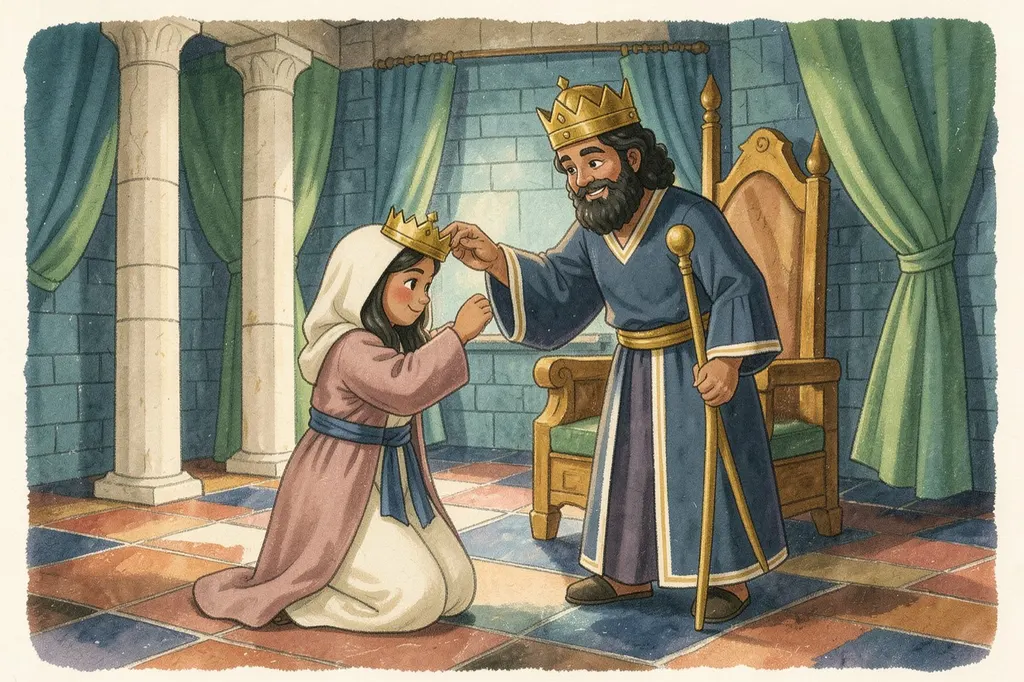
Long ago, a great king named Ahasuerus ruled Persia, from his palace in the city of Shushan.
In Shushan lived a Jewish man named Mordecai. His young cousin Esther had no father or mother, so Mordecai brought her up as his own daughter.
The king wanted a new queen, and many young women were brought to the palace. Esther was one of them. Mordecai told her to keep it secret that she was Jewish.
And the king loved Esther more than all the others,
“so that he set the royal crown upon her head, and made her queen”
Later, Mordecai found out that two doorkeepers planned to hurt the king. He told Queen Esther, and she told the king, in Mordecai's name. The men were caught, and it was all written down in the king's book.
Scene 2 of 6
Mordecai will not kneel
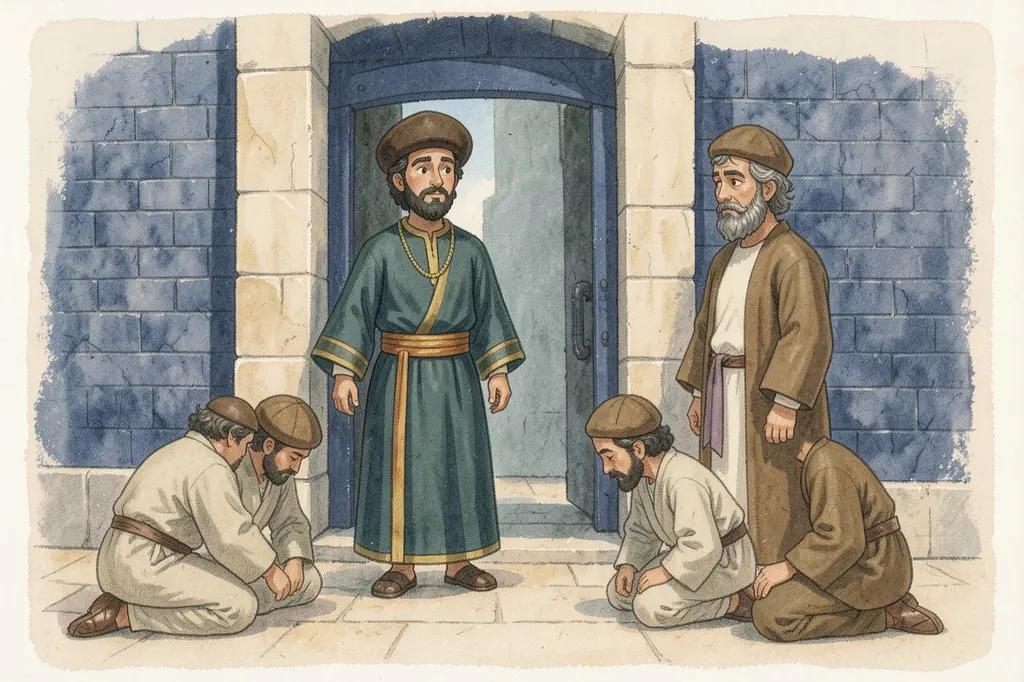
Then the king made a man named Haman his most important prince. The king commanded all his servants at the gate to kneel down to Haman.
So they knelt. But Mordecai, a Jew, would not.
Haman was full of anger. He made a wicked plan, to destroy not just Mordecai, but all his people, the Jews, in the whole kingdom.
Lots were cast to choose the day, a bit like rolling dice. The lot was called Pur.
Haman told the king about a people who did not keep his laws, and asked that they be destroyed. So the king gave Haman his ring.
Letters went out to every land, sealed with the king's ring. On one day in the month of Adar, all the Jews were to be destroyed.
The king and Haman sat down to drink. But the city of Shushan was troubled.
Scene 3 of 6
For such a time as this
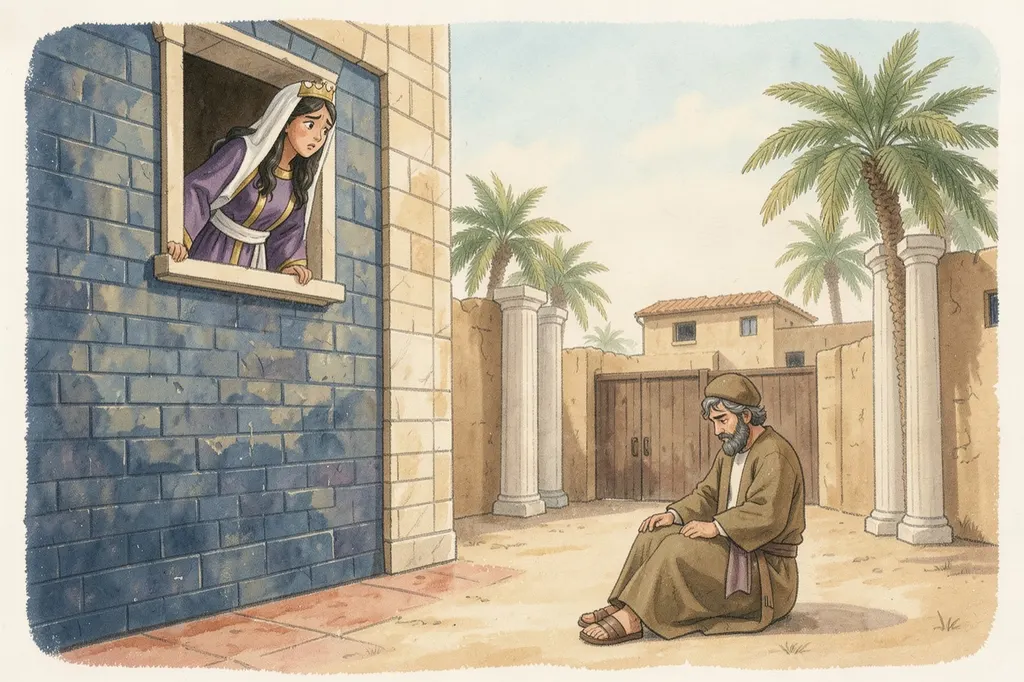
When Mordecai heard, he put on sackcloth, rough cloth for great sorrow, and cried a loud and bitter cry.
He sent Esther a copy of the letter, and asked her to go and beg the king for her people.
But Esther sent back that anyone who went in to the king uncalled would be put to death, unless the king held out his golden sceptre, his special rod. And she had not been called for thirty days.
Mordecai answered that the palace would not keep her safe. If she kept quiet, help would come for the Jews from somewhere else. Then he asked,
“and who knoweth whether thou art come to the kingdom for such a time as this?”
Esther asked all the Jews in Shushan to fast for her for three days. She would fast too. To fast is to go without food or drink. Then she said,
“and so will I go in unto the king, which is not according to the law: and if I perish, I perish.”
Perish means die. Mordecai did all that Esther asked.
Scene 4 of 6
The golden sceptre
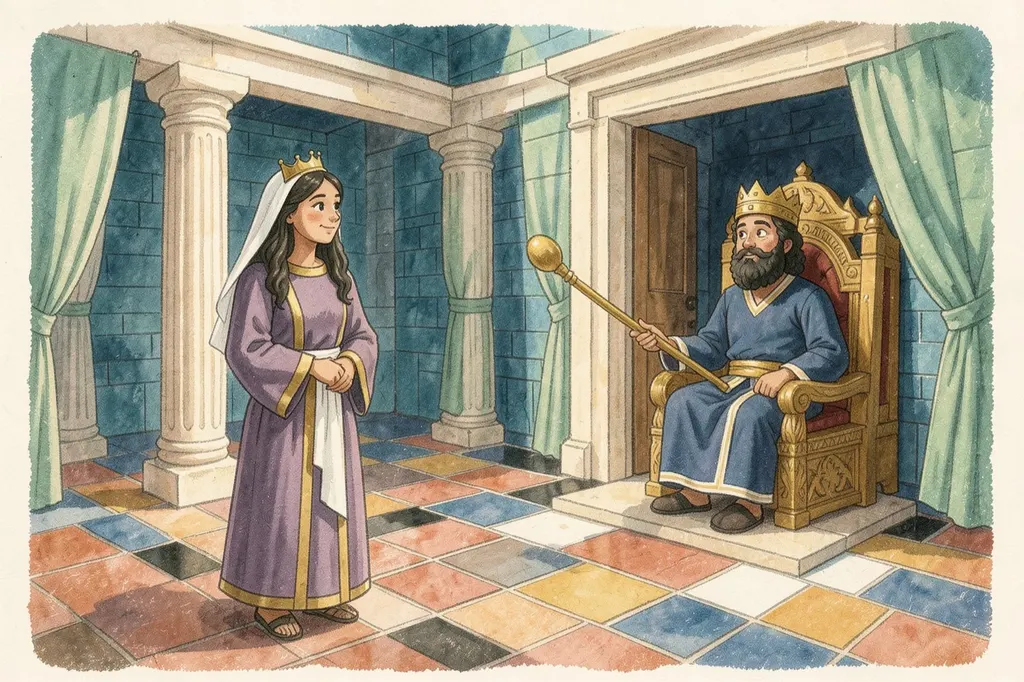
On the third day, Esther put on her royal clothes, and stood in the inner court, facing the king's throne.
The king saw Queen Esther standing there. What would he do?
“the king held out to Esther the golden sceptre that was in his hand. So Esther drew near, and touched the top of the sceptre.”
The king asked what she wanted. He would give it, he said, even to half of his kingdom.
Esther asked the king and Haman to a banquet, a big, special meal.
There the king asked again. And Esther asked them both to come to a second banquet, the next day. Then she would tell him.
Scene 5 of 6
The night the king could not sleep
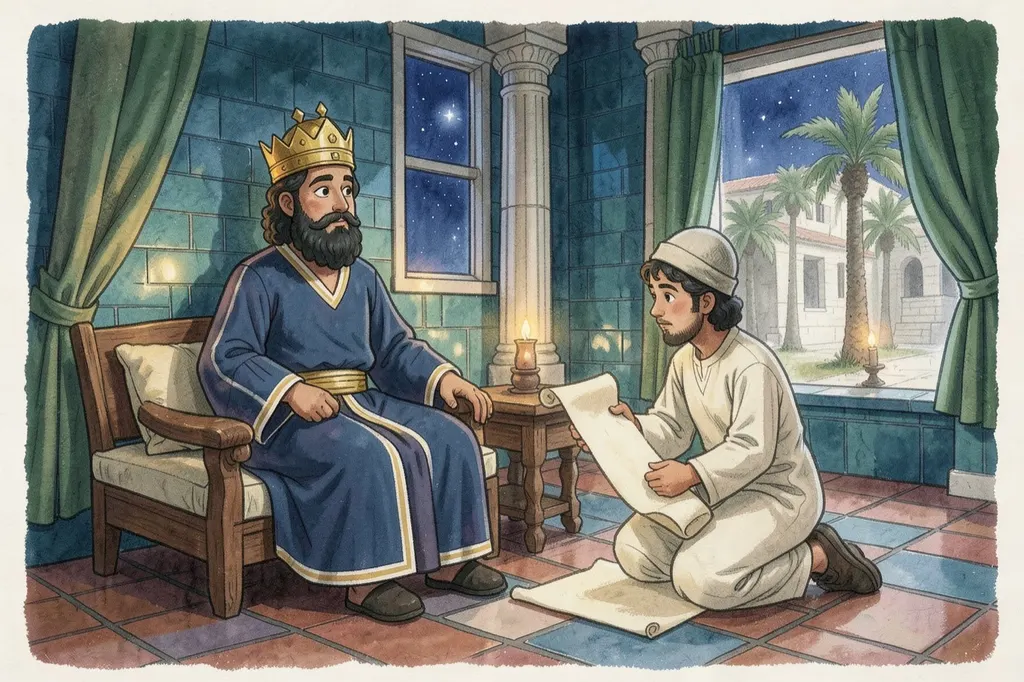
“On that night could not the king sleep”
So he called for his book of records. In it was how Mordecai had warned about the two doorkeepers.
Nothing had been done to honour Mordecai for it.
Then Haman came into the court, to speak to the king against Mordecai. The king asked him what should be done for the man the king delights to honour.
Haman thought in his heart that the king must mean him. So he said to dress the man in the king's clothes, and take him through the city on the king's horse. And to call out that this is done for the man the king delights to honour.
Then the king told Haman to hurry, and do it all for Mordecai the Jew.
So Haman led Mordecai through the city on the king's horse. Then Haman hurried home, with his head covered, full of sorrow.
Scene 6 of 6
Esther speaks up
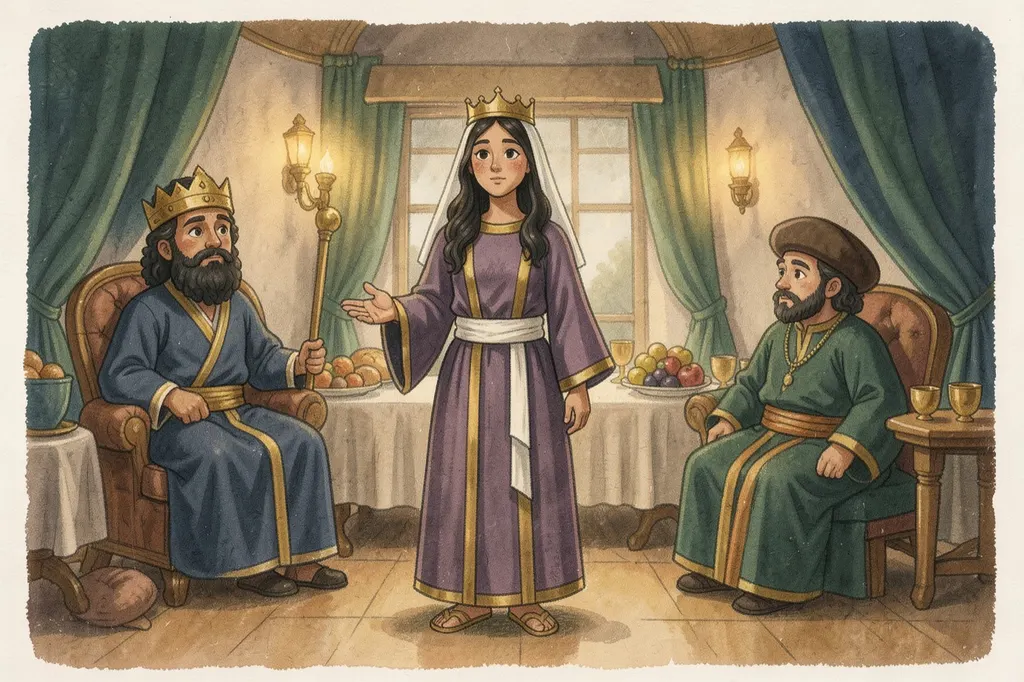
At the second banquet, the king asked Esther once more what she wanted. And she said,
“let my life be given me at my petition, and my people at my request”
She and her people, Esther said, had been sold to be destroyed. The king asked who had dared to do this. Esther said,
“The adversary and enemy is this wicked Haman.”
Haman was afraid. The king rose up in anger. Then he gave the order, and Haman was put to death.
Then the king gave Mordecai his ring. New letters went out, so the Jews could stand together and defend their lives. When the day of Haman's plan came, the Jews fought for their lives, and were saved.
Every year since, Jewish families keep a glad feast called Purim.
Do you remember what Mordecai asked Esther? For such a time as this.
Can you say it too? For such a time as this.
The golden sceptre was held out to Esther.
And her people were saved.
Their sorrow was turned to joy.
How to explain the story of Esther to a child
Start with Mordecai's question: "who knoweth whether thou art come to the kingdom for such a time as this?" (Esther 4:14). Esther was in the palace just when her people needed her, and she went to the king though it might cost her life (Esther 4:16). The book never names God, so wonder together where his care shows, like the king's sleepless night (Esther 6:1).
What this story shows about God
For grown-ups. The story itself never states a lesson, so here it is, with the verses behind it.
God's care can be hidden
The book of Esther never names God. But Mordecai was sure help for his people would come, and the wider Bible says the one who keeps Israel never sleeps.
Esther 4:14; Psalm 121:4God puts people where they are needed
Joseph told his brothers that God had sent him ahead of them to save lives. Many readers see the same in Esther, a queen in the palace at just the right time.
Genesis 45:5; Esther 4:14God turns sorrow into joy
In Esther, the month meant for sorrow became a month of joy. The Psalms say the same of God: weeping may last for a night, but joy comes in the morning.
Esther 9:22; Psalm 30:5Questions to ask after
Pick the ones that fit your child. There are no wrong answers.
Ages 3 to 5
- Who brought Esther up when she was little?
- What did the king hold out to Esther?
- How do you think Esther felt as she walked in to see the king?
Ages 6 to 9
- Mordecai asked whether Esther had come to the kingdom for such a time as this. What do you think he meant?
- Esther asked her people to fast with her before she went to the king. Why do you think she wanted them with her?
- When have you needed to speak up for someone else?
Ages 10 to 12
- The book of Esther never names God. Where do you think you can see his care in the story?
- Haman wanted everyone to kneel to him. How did his pride turn out in the end?
- Esther kept it secret that she was Jewish. Why do you think she chose to speak up for her people at last, even though it was dangerous?
If your child asks
Honest answers to the hard questions, with the verses behind them.
Why doesn't the book of Esther mention God?
The book of Esther never names God, and it doesn't say anyone prayed, though Esther and the Jews fasted (Esther 4:16). Many Jewish and Christian readers see God's hidden care in what happens: Esther in the palace at just that time (Esther 4:14), and a king who could not sleep on the very night Mordecai's good deed was found (Esther 6:1). The wider Bible says that he who keeps Israel "shall neither slumber nor sleep" (Psalm 121:4).
Esther 4:14-16; Esther 6:1; Psalm 121:4
Why wouldn't Mordecai bow to Haman?
The book of Esther doesn't give a reason. Esther 3:4 says only that Mordecai had told the king's servants he was a Jew. Some readers think he would give that kind of honour to God alone; others point to the old enmity between Israel and Agag's people, since Haman was an Agagite (Esther 3:1; 1 Samuel 15:8). It is fine to tell your child the Bible doesn't say.
Esther 3:1-4; 1 Samuel 15:8
What happened to Haman in the story of Esther?
For grown-ups: Esther 7:9-10 tells that Haman was hanged on the gallows he had built for Mordecai, and Esther 9:10-14 that his ten sons were killed and hanged too. Our Esther story says only that Haman was put to death. With a young child you could say: Haman's wicked plan came back on him, and Esther and her people were kept safe.
Esther 7:9-10; Esther 9:10-14
Was there fighting at the end of the Esther story?
Yes. A law sealed with the king's ring could not be undone (Esther 8:8), so the king's new letter let the Jews gather and defend their lives on the day Haman had chosen (Esther 8:11). Esther 9:1-16 tells that they fought those who attacked them and that many died, but they took no spoil. Our story says this in one sentence. With a young child you could say: the Jews were allowed to protect themselves, and they were saved.
Esther 8:8-11; Esther 9:1-16
What is Purim, from the story of Esther?
Purim is the Jewish feast that remembers the story of Esther. It is named after Pur, the lot cast before Haman to choose the day to destroy the Jews (Esther 3:7; Esther 9:24-26). Esther 9:22 says to keep it as days of feasting and joy, of sending portions to one another and gifts to the poor. Jewish families still keep it every year, in late winter or early spring, and read the book of Esther aloud.
Esther 3:7; Esther 9:20-28
What we added and left out
Every quoted line in this story is the King James Bible, word for word.
What we added
- Plain explanations of old words, in the next breath: Pur and lots, sackcloth, sceptre, fast, perish, banquet.
- We call Mordecai Esther's cousin. The Bible says she was "his uncle's daughter", whom he "took for his own daughter" when her father and mother were dead (Esther 2:7).
- That King Ahasuerus ruled from his palace in Shushan is from Esther 1:1-2, and that he wanted a new queen is from Esther 2:1-4, just before our first scene.
- We say "kneel" where the King James says the servants "bowed, and reverenced Haman" and Mordecai "bowed not, nor did him reverence" (Esther 3:2). We say the city was troubled; the King James says "the city Shushan was perplexed" (Esther 3:15).
- We say Mordecai's message to Esther was that the palace would not keep her safe, for the King James "Think not with thyself that thou shalt escape in the king's house, more than all the Jews" (Esther 4:13). We say the book of records held how Mordecai had warned the king. The King James says the records "were read before the king" and "it was found written" (Esther 6:1-2).
- We say Esther stood "facing the king's throne" for the King James "over against the king's house" (Esther 5:1).
- The end of the last scene is told from outside its passage, in a few sentences: Mordecai given the king's ring (Esther 8:2); the new letters (Esther 8:9-14); the Jews fighting for their lives and being saved on the day Haman had chosen (Esther 9:1-2, 9:16); and the feast of Purim, named after Pur (Esther 9:20-28). The last line, sorrow turned to joy, is from Esther 9:22.
- King Ahasuerus is called Xerxes in many modern Bibles, including the Berean Standard Bible beside our scenes.
- The "listen for it" frame and the questions from the narrator to your child. Mordecai's words, for such a time as this, are from Esther 4:14.
What we left out
- Queen Vashti, who would not come when King Ahasuerus called for her, and the king's great feast (Esther 1).
- Esther's Hebrew name, Hadassah (Esther 2:7), her year of beauty treatments with oil of myrrh and sweet odours (Esther 2:12), and the feast the king gave for her (Esther 2:18).
- That the two doorkeepers who planned to hurt the king were hanged (Esther 2:23), and what Haman's wife and friends told him when he came home (Esther 6:13).
- Esther sending clothes to Mordecai, the messenger Hatach who went between them (Esther 4:4-10), and Mordecai's warning that if Esther kept quiet, she and her father's house would be destroyed (Esther 4:14).
- The ten thousand talents of silver Haman offered the king (Esther 3:9), and the Jews mourning and weeping in every province (Esther 4:3).
- The gallows Haman built for Mordecai, on the advice of his wife Zeresh and his friends (Esther 5:9-14), and that Haman came to ask the king to hang Mordecai on it (Esther 6:4).
- Haman falling on the couch where Esther sat, and the king's servant Harbonah pointing to the gallows (Esther 7:7-9). See "If your child asks" above.
- Esther pleading with the king a second time (Esther 8:3-6), the details of the fighting on the thirteenth of Adar and the death of Haman's ten sons (Esther 9:1-16), and Mordecai's greatness in the kingdom (Esther 10).
Not in the Bible, so not in our story
The book of Esther never names God, not even once, and it never says that Esther prayed: it says she and the Jews fasted (Esther 4:16). It doesn't say how Esther felt as she walked in to the king, or why Mordecai would not bow to Haman (Esther 3:2-4). It doesn't say how old Esther was when she became queen; Esther 2:7 calls her only "the maid", a young woman.
Words from the story
Old Bible words your child might ask about.
- Ahasuerus
- The king of Persia in the story of Esther. Many Bibles call him Xerxes.
- Shushan
- The city where the king's palace was. Today it is often called Susa.
- Pur
- The lot that was cast to choose a day, a bit like rolling dice. Purim means lots.
- Sackcloth
- Rough, scratchy cloth that people wore when they were very sad.
- Fast
- To go without food, and sometimes without drink, for a while.
- Sceptre
- A king's special rod, a sign of his power. It is also spelled scepter.
- Perish
- To die.
- Banquet
- A big, special meal for guests.
- Petition
- Something you ask for.
- Adversary
- An enemy, someone who is against you.
- Purim
- The Jewish feast that remembers how Esther's people were saved. It is kept every year.
Sources and how we made this story
References
- Esther 2:5-23: King James Version and Berean Standard Bible
- Esther 3:1-15: King James Version and Berean Standard Bible
- Esther 4:1-17: King James Version and Berean Standard Bible
- Esther 5:1-8: King James Version and Berean Standard Bible
- Esther 6:1-12: King James Version and Berean Standard Bible
- Esther 7:1-10: King James Version and Berean Standard Bible
- King James Version (1769 Oxford text), public domain. Berean Standard Bible, public domain since 2023 (berean.bible).
- Background: Esther on Wikipedia.
How we made this story
- The retelling. Written by Tinykiwi with AI assistance, following how we tell these stories, then checked line by line against the Bible text. Every quoted line is the King James Version, word for word. What we explained, added and left out is listed above.
- The pictures and narration. The illustrations are AI-generated and chosen by hand. The narration is an AI voice recorded ahead of time, and every recording is checked word for word against the text.
- These stories are part of Tinykiwi, an audio Bible App for Kids we are building. For apps you can use today, see our guide to the best Bible story apps for kids.
More Bible stories for kids
- The Ten Commandments
- The David and Goliath Story
- Daniel and the Lions' Den
- Jonah and the Whale
- The Christmas Story
Coming soon: Samson, Pentecost, Gideon, The Baptism of Jesus.
Tinykiwi. Coming soon.
The audio Bible app for kids.
Tinykiwi is an audio Bible app for kids that turns Bible learning into family time at bedtime, in the car, or before church.